
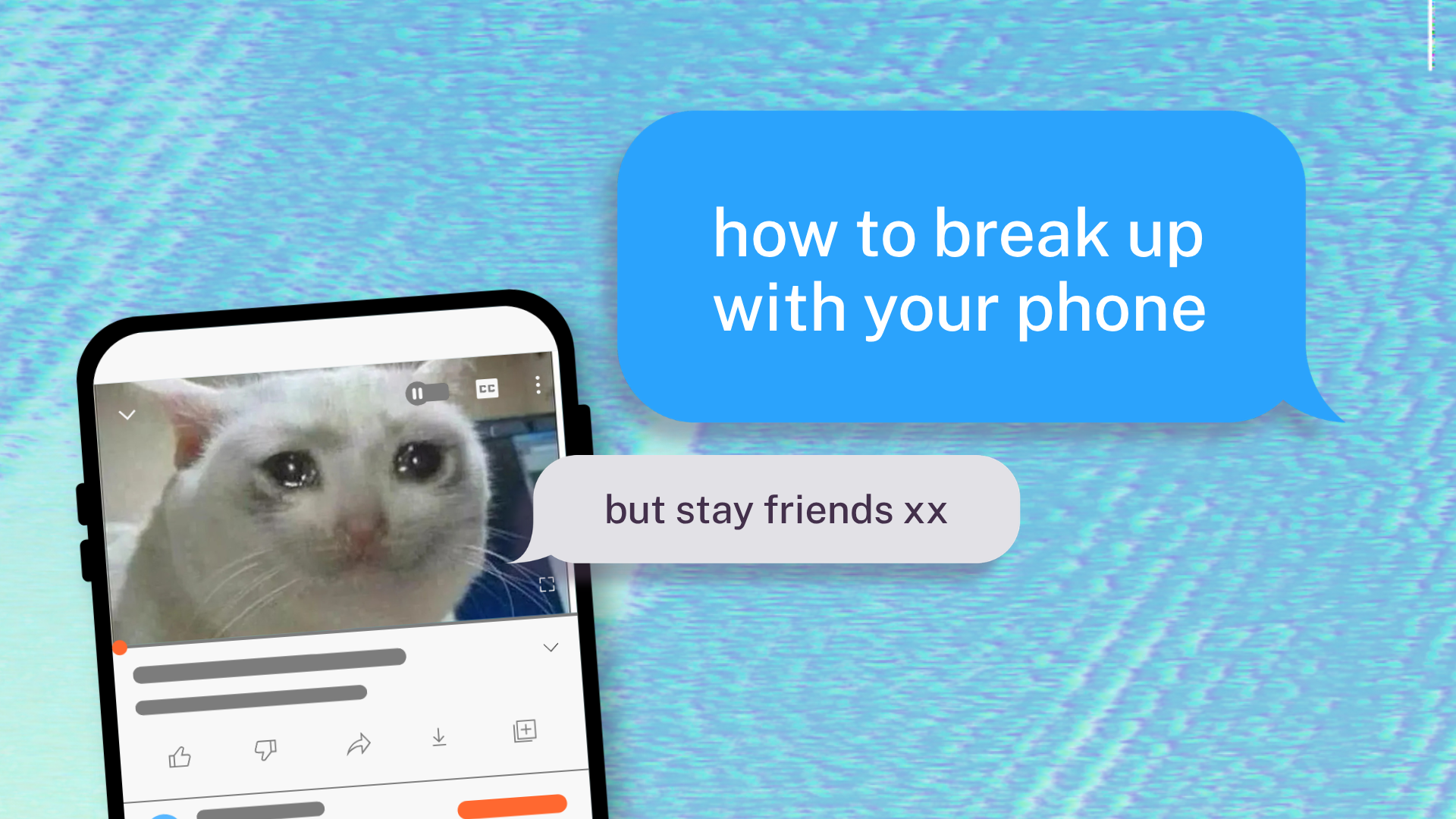
8 books to help you break up with your phone
You asked what to read next to keep the conversation going.
The Life We’re Looking For
Andy Crouch
What are we actually searching for when we reach for our phones? Crouch argues that technology promises both love and meaning but delivers neither, and also explains the distinction between devices and instruments.
Stolen Focus
Johann Hari
Your attention is being systematically stolen. Hari spent years building his case that our lack of concentration is a bigger issue than willpower – tech corporations are deliberately getting you addicted and harvesting your attention. Do yourself a favour, and read this book.
The Shallows
Nicholas Carr
This reads like a prophecy … from 2011.
If you want to understand how the internet is reshaping your brain at a neurological level, this is the one all the experts still cite.
How to break up with your phone
Catherine Price
A 30-day practical plan that’s non-preachy and actually doable. If you left Tapping In wanting some concrete next steps, then this is your book. Read it with a friend and do it together.
Spacemaker
Daniel Sih
Practical, hands-on, and written by an Australian (always a bonus). Sih is a productivity expert, so if you’re short on time and don’t want to wade through theory, this is your starting point.
Digital Liturgies
Samuel D. James
Every app projects a vision of human life, and a liturgy (or set of habits and patterned practices) to embed that vision in you. James asks: what kind of person is the internet shaping you into?
Restless Devices
Felicia Wu Song
Why do our devices leave us feeling restless even when we’re “connected”? Song explores what it means to seek a stable self in an age of endless scrolling. This read is rich in theology, but also accessible to anyone asking the same questions.
Strong and Weak
Andy Crouch
Ok so it’s not about tech, but it’s the subtext of everything we talked about at Tapping In. Crouch argues the truly flourishing life means embracing agency and vulnerability together. It’s the life Jesus modelled, and the one we keep outsourcing to our screens.
The Expulsive Power of a New Affection
Thomas Chalmers
Written in 1829 but somehow more relevant than ever, Chalmers explains that you can’t dislodge a lesser love by willpower alone – a greater one must displace it.